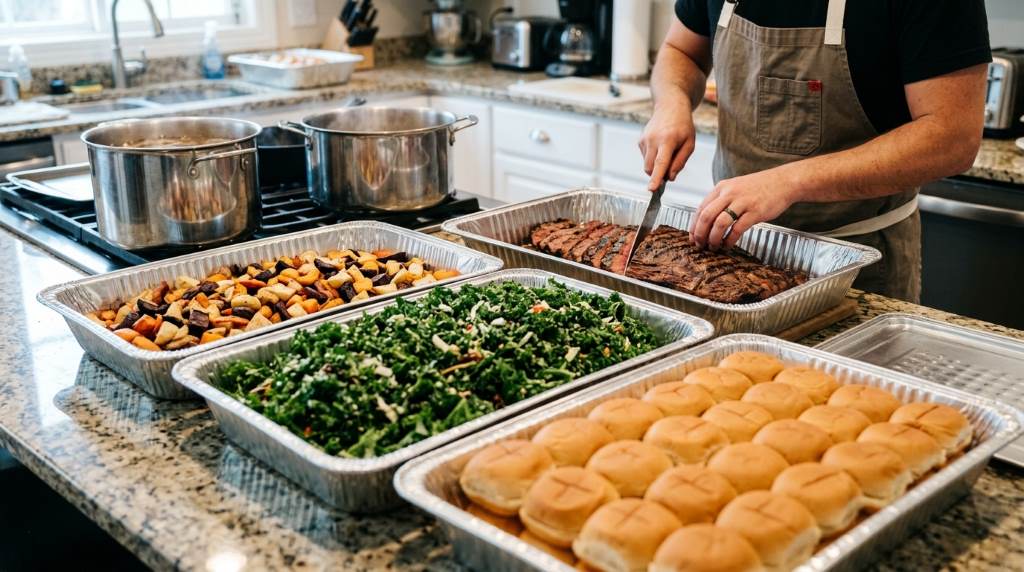
If you are planning food for 30 guests, prepare about 30 main servings, 60 side…

Host with Confidence: Allergy-Safe Buffets Using a Simple Color-Coded Plate System
Buffet parties are a fantastic way to celebrate milestones, holidays, or simply gather loved ones. The variety, the mingling, the casual atmosphere – it’s a recipe for a great time. However, for hosts navigating the world of food allergies and dietary restrictions among guests, the buffet spread can also be a source of significant anxiety. How do you ensure Sarah, who has a severe nut allergy, doesn’t accidentally grab a scoop from a dish cross-contaminated by peanuts? How can you make it easy for Uncle Jim, who needs gluten-free options, to identify safe choices without constantly asking?
The fear of cross-contamination and allergic reactions can overshadow the joy of hosting. But what if there was a simple, visual system to make your buffet safer and less stressful for everyone? Enter the color-coded plate system – a practical, intuitive approach borrowed from professional food safety practices, adapted for the home party environment. This system uses color to clearly communicate allergy information, empowering guests to make safe choices and giving hosts much-needed peace of mind.
The Power of Color: Why a Coded System Works for Allergy Safety
The concept is straightforward: assign specific colors to different food categories based on allergens or dietary needs. For instance, green plates might be designated for vegetarian dishes, blue for gluten-free, red for dishes containing nuts, and perhaps purple, a color often used in commercial settings, specifically for top-allergen-free options. This visual distinction instantly cuts through the ambiguity often present at a busy buffet table. It moves beyond tiny, easily missed labels and provides an immediate, understandable cue.
The benefits of implementing such a system are manifold. Firstly, it dramatically reduces the risk of unintentional cross-contamination at the point of serving. A guest needing a nut-free plate is less likely to accidentally use a serving spoon from a nut-containing dish if the plates and potentially the serving utensils are clearly color-differentiated. Secondly, it empowers guests. Those with allergies or restrictions can navigate the buffet with greater confidence and independence, reducing the need to constantly seek clarification from the host. This fosters a more inclusive and relaxed environment for everyone. Finally, for the host, it alleviates a significant amount of stress, knowing that clear visual safeguards are in place to help protect their guests. It demonstrates care and consideration, making guests with dietary needs feel truly catered for and safe.
Setting Up Your Spectrum of Safety: Implementing Color-Coding Step-by-Step
Putting a color-coded system into practice requires a bit of planning but is entirely achievable for a home host. The key is clarity and communication. Start by gathering information. When sending out invitations, include a section on the RSVP asking guests to specify any food allergies (including severity) or significant dietary restrictions (like Celiac disease, veganism, etc.). Knowing exactly what you need to accommodate is crucial.
Based on the responses, decide what you need to code for. You might not need a separate color for every single one of the top nine allergens (Milk, Eggs, Peanuts, Tree Nuts, Fish, Crustacean Shellfish, Wheat, Soy, Sesame). Instead, focus on the specific needs of your guests. Perhaps you need codes for ‘Contains Nuts,’ ‘Gluten-Free,’ ‘Dairy-Free,’ and ‘Vegan.’ Or, if you have multiple guests with severe allergies, you might designate a specific color like purple to mean ‘Free From Top 8 Allergens.’ Choose distinct colors that are easy to tell apart – avoid using shades that are too similar.
Next, source your supplies. This doesn’t necessarily mean buying expensive sets of reusable colored plates (though that’s an option). You can use colorful disposable plates and cutlery, which are readily available at party supply stores or online. Alternatively, use standard white plates and apply large, brightly colored stickers or labels to them. Another effective method is to color-code the serving utensils – either purchase utensils with colored handles or tie distinct colored ribbons securely around the handles of standard utensils. You can even use colored napkins placed strategically. Think about what’s practical and affordable for your event. Don’t forget clear labels for each dish, reinforcing the color code (e.g., a small sign next to the pasta salad saying “Contains Wheat – Use White Plate”).
The setup of the buffet table itself is critical. Group dishes according to their color code or dietary category as much as possible. Create some physical space between different categories, especially separating high-risk allergens like nuts or gluten from other foods. Place the correctly colored stack of plates near the corresponding food group. Crucially, provide a dedicated serving utensil for every single dish and ensure it matches the color code or stays strictly with its designated dish. Avoid placing a ‘safe’ dish right next to an allergen-containing one where ingredients could easily spill or mix.
Finally, and perhaps most importantly, communicate the system clearly to your guests. Include a brief explanation in the invitation or a pre-party email: “To help guests with dietary needs navigate the buffet safely, we’ll be using a color-coded plate system. Look for the key at the buffet table!” At the party, place a prominent, easy-to-read sign at the start of the buffet line explaining the color key (e.g., “Green Plate = Vegan, Blue Plate = Gluten-Free, Red Plate = Contains Nuts. Please use only the designated plate color for these items and use the serving utensil provided for each dish.”). You might also briefly explain the system as guests arrive or begin to serve themselves. Clear, consistent communication prevents confusion and ensures the system works effectively.
Related: The Delicate Art of Tea Party Attire: A Guide to Grace and Style
Beyond the Plate: Layering Your Allergy Safety Strategy

While a color-coded system is a powerful tool, it works best as part of a multi-layered approach to allergy safety. Absolute transparency about ingredients is vital. Even with color-coding, some guests may need more detailed information. Be prepared to provide full ingredient lists for each dish. This doesn’t mean you need a placard listing every ingredient on the buffet itself, but have the information readily available – perhaps typed up on a sheet you can refer to if asked. This requires meticulous label reading during your shopping and preparation (“Triple Check” labels: at the store, when putting away, and before using). Remember, formulations can change.
Preventing cross-contamination must start in the kitchen, long before the first guest arrives. Use clean cutting boards, knives, bowls, and utensils for preparing allergen-free dishes. If possible, prepare these dishes first before introducing potential allergens into your workflow. Wash your hands thoroughly with soap and water between handling different ingredients, especially after touching known allergens. Clean all surfaces meticulously before and during food preparation. Even small traces of an allergen transferred via a crumb on a counter or residue on a knife can cause a reaction in highly sensitive individuals.
During the party, the vigilance continues at the serving stage. Reinforce the rule of one dedicated serving utensil per dish. Discourage guests from swapping utensils or using their personal cutlery to serve themselves from communal dishes. If feasible, having a friend or family member gently monitor the buffet area, especially early on, can help guide guests and prevent accidental mix-ups. They can offer polite reminders about using the correct utensils and plates.
Lastly, while focusing on prevention, it’s wise to be prepared for emergencies, especially if you know guests have severe, potentially anaphylactic allergies. Discreetly know who these guests are. If they carry epinephrine auto-injectors (like an EpiPen), know where they are kept (with their permission, of course – often the guest or their parent will inform you). Have emergency contact numbers readily accessible. This preparation is a crucial backup for any event involving food allergies, providing an extra layer of safety alongside your preventative measures like color-coding.
Navigating Potential Hurdles: Challenges and Smart Solutions
Implementing a new system can sometimes present challenges, but most can be overcome with foresight. One common concern is complexity – what if you have guests with many different, overlapping allergies? Trying to create a unique color for every single permutation can quickly become confusing for everyone. The solution here is to prioritize. Focus on the most severe or prevalent allergies among your specific guest list. Group common restrictions; for example, a single color for ‘Gluten-Free & Dairy-Free’ might work if those often overlap for your guests. Or, use the system for major categories (Nut-Free, Gluten-Free, Vegan) and handle very specific, individual needs through direct communication with that guest, perhaps even preparing a separate, safe plate for them in the kitchen. Simplicity is often key to a system people will actually use correctly.
Another potential hurdle is the cost or availability of supplies. Finding six different perfectly matching sets of colored plates might be difficult or expensive. This is where creativity comes in. As mentioned earlier, don’t feel locked into colored plates only. Use inexpensive white paper plates and buy packs of large, colored dot stickers to designate them. Use colored napkins strategically under dishes or for guests to pick up. Focus the color-coding effort on the serving utensils (colored handles or tied ribbons) or clear, color-coded labels next to each dish. The goal is clear visual communication, and there are many budget-friendly ways to achieve this beyond buying all-new tableware.
Finally, there’s the factor of guest awareness and compliance. Despite your best efforts, guests might get caught up in conversation and forget the system, mix up plates, or absentmindedly use the wrong serving spoon. Consistent and clear communication is the best preventative measure. Make the instruction sign large, simple, and prominently placed. Gentle, friendly reminders can be helpful, especially early on (“Just a reminder, the blue plates are for the gluten-free items over here!”). Leading by example and having someone subtly oversee the buffet initially can also encourage compliance. Most guests, especially those who understand the importance of allergy safety (either for themselves or others), will appreciate the system and try their best to adhere to it.
Related: Party Planning: How Much Beer and Wine for 60 Guests
People Also Ask (FAQs)
Q1: What are the most common food allergies I should be aware of when planning?
A: While over 170 foods can cause allergies, the vast majority of serious reactions are linked to the “Big 9” allergens identified by U.S. law: Milk, Eggs, Peanuts, Tree Nuts (like walnuts, almonds, cashews), Fish (like salmon, cod), Crustacean Shellfish (like shrimp, crab, lobster), Wheat, Soy, and Sesame. Always ask your specific guests, as individual allergies can vary widely.
Q2: Can I use colored labels or utensils instead of buying different colored plates?
A: Absolutely! The core principle is clear visual communication. You can effectively use large, color-coded labels placed directly in front of each dish, colored serving utensils (either purchased or by tying colored ribbons on handles), or even colored tablecloth sections or placemats to designate zones. Choose the method (or combination) that is most practical and clear for your setup.
Q3: How do I best explain the color-coding system to my guests without making it complicated?
A: Keep it simple and multi-pronged. Briefly mention it in the invitation. Create a clear, concise sign at the buffet entrance with the color key (e.g., “Blue Plates = Gluten-Free”). Offer a quick, friendly verbal explanation as guests approach the buffet (“Just letting everyone know, we’re using colors to mark allergens – the key is right here!”). Avoid jargon and focus on the practical aspect: matching the plate/utensil color to their needs.
Q4: What should I do if a guest has multiple, complex allergies?
A: This requires extra care and direct communication with the guest beforehand. The standard color-coding might not suffice. Discuss their specific needs. You might need to prepare a separate, safe meal or plate for them entirely in the kitchen, ensuring no cross-contamination. Clearly label this plate for them. The color system helps the broader group, but complex individual needs often require personalized solutions.
Q5: Is a color-coded system completely foolproof against allergic reactions?
A: No system is 100% foolproof when dealing with severe allergies. Color-coding significantly reduces the risk of cross-contamination at the serving stage and improves clarity. However, it must be combined with diligent kitchen practices (preventing cross-contamination during prep), accurate ingredient information, clear communication, and guest vigilance. It’s a powerful tool, but not a replacement for overall allergy awareness and careful management.
Conclusion: Serving Safety and Inclusion
Hosting a buffet party when food allergies are in the mix doesn’t have to be an overwhelming source of stress. Implementing a simple, visual tool like a color-coded plate and utensil system can transform the experience for both hosts and guests. By clearly demarcating safe options and potential allergens, you minimize the risk of dangerous mix-ups and empower guests with dietary restrictions to serve themselves with confidence and ease.
This system, combined with careful planning, transparent communication about ingredients, and diligent practices to prevent cross-contamination in the kitchen, creates a much safer dining environment. More than just a practical measure, adopting a color-coded system demonstrates profound care and consideration for your guests’ well-being. It fosters an atmosphere of inclusivity, ensuring that everyone, regardless of their dietary needs, can relax, enjoy the delicious food, and partake fully in the celebration. By taking these thoughtful steps, you can host with confidence, knowing you’ve created a welcoming and safer space for all your guests to enjoy the party.

Related Posts